Xarel·lo and Verdejo are two Spanish white grapes that often end up on the same shelf, but have very little in common. Xarel·lo is Catalan, grown mainly in the Penedès, a few kilometres from Barcelona, and is the backbone of Cava; Verdejo, on the other hand, comes from the Castilian plateau, where in the DO Rueda it produces still, aromatic and almost always dry whites.
Their characters in the glass also differ: Xarel·lo is austere and savoury, with an almost metallic hardness and a firm acidity, while Verdejo is more aromatic, with citrus, herbs and its trademark bitter finish. Below you will find the characteristics of both varieties, how they are vinified, and a comparison between two bottles tasted at home.
Newsletter
The best wines, no boring scores
Xarel·lo
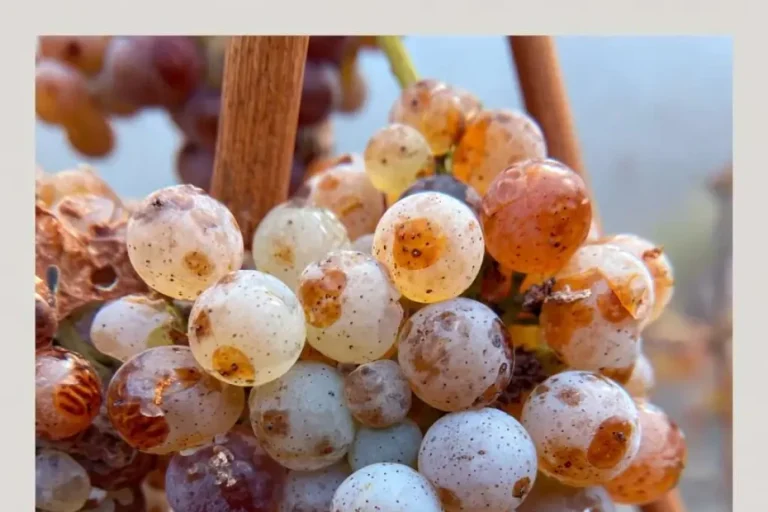
Xarel·lo (the spelling with the middle dot, the Catalan ela geminada, often becomes Xarel-lo on labels) is the most widely grown white variety in the Penedès, in Catalonia. In Alella, north of Barcelona, it goes by the name Pansa Blanca, and there is also a pink-berried mutation, Xarel·lo Vermell. It has thick skins and compact bunches, and retains good acidity even in the Mediterranean climate.
What kind of wine is Xarel·lo? First and foremost a dry white, though it leads two lives. It is one of the three classic varieties of Cava, alongside Macabeo and Parellada, to which it brings body, structure and ageing potential; increasingly, however, it is also vinified as a still, single-varietal wine in the DO Penedès and in Alella.
What does Xarel·lo taste like? On the nose and palate it recalls green and yellow apple, pear, fennel, aromatic herbs, citrus and white flowers, with a note of rock and a pronounced savouriness. Over time, especially in long-aged sparkling wines, dried fruit and a dusty attic character emerge. In the mouth it has medium-high acidity, medium body and a certain hardness – almost metallic – that is its hallmark.
In my notes Xarel·lo always comes back with the same words: attic, steel, rock. Sparkling versions, such as the Cava Tresor Gran Reserva by Pere Ventura, fully display that attic and dried fruit character; the still versions, on the other hand, have often struck me as empty, taut and little else. The exception was the El Fanio 2023 by Albet i Noya, excellent precisely because, thanks to the acacia barrel, it was not too Xarel·lo-like: chamomile, Mirabelle plum, thyme and a chalky finish. Catalan natural whites, however, such as the Blanc Fugitiu by Bodega Clandestina tasted at Pub Klemo, often seem all alike to me.
How Xarel·lo Is Made
In the winery Xarel·lo is a versatile grape, and the final style depends on what you want to achieve: a sparkling base, a fresh still white or a white built for ageing. These are the key steps that make the difference:
- Gentle pressing and stainless-steel fermentation at controlled temperature, for the freshest stills and Cava base wines;
- Lees ageing with bâtonnage, which rounds out the variety’s hardness and adds creaminess;
- Oak – but also chestnut and acacia wood – which adds buttery and spiced notes;
- Skin maceration, the Catalan traditional brisat, for more structured and tannic whites;
- Amphorae and concrete tanks, widely used by natural producers;
- Second fermentation in bottle using the traditional method, for Cava and Corpinnat, with ageing that exceeds 30 months in Gran Reserva wines.
- Cava
- Traditional-method sparkling wine produced mainly in the Penedès, traditionally from Macabeo, Xarel·lo and Parellada.
- Corpinnat
- A collective brand created by a group of Penedès producers who left the DO Cava: hand-harvested grapes and at least 18 months on the lees.
- Brisat
- Catalan term for whites fermented in contact with the skins – the equivalent of orange or skin-contact wines.
The Importance of the City (My Opinion)
When I think about Xarel·lo – a grape that, at least so far, has never truly excited me – I wonder how much the fortunes of a variety are connected to the presence or absence of a major city nearby. Would Xarel·lo, with that prickly name, have survived the ups and downs of time if it had not been grown so close to Barcelona? The Spanish city is a hugely popular tourist destination and, helped by the appeal the Mediterranean holds for English-speaking visitors, demand for local wines – “holiday wines” – is strong. If Xarel·lo had been the variety of Murcia, I believe, it would not be as well known as it is today.
To be clear, there is nothing wrong with this: wine is also an economic matter, and economic factors make and break the bank balances of those caught up in them – a favourable location for vineyards is not a fault at all, but the norm. If it had not been convenient for the English to import wine from Bordeaux, the fate of the chateaux would have been very different; if the Austrians had not had the Collio and had not brought its wines to Vienna, Ribolla would have been forgotten.
And yet, yes, when I drink a Xarel·lo, I cannot quite shake the feeling that Catalonia has given more to this variety than this variety has given to Catalonia.
Verdejo
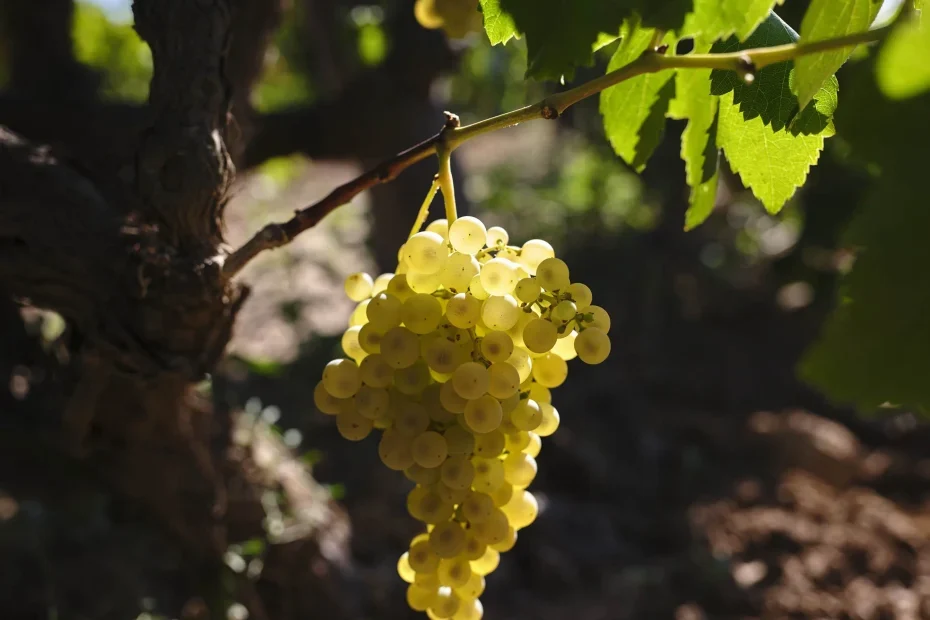
Verdejo is the emblematic variety of DO Rueda, in Castile and León: a plateau crossed by the Duero, between 700 and 800 metres in altitude, with hot summers, harsh winters and large diurnal temperature swings. For centuries the region produced mainly an oxidative white, close in style to Sherry; then, in the 1970s, with the arrival of Marqués de Riscal and the consulting work of Bordeaux oenologist Émile Peynaud, Verdejo became the fresh, aromatic white we know today. The DO Rueda was established in 1980.
On the nose it offers citrus such as grapefruit and lime, white peach, fennel, aromatic herbs like bay leaf, hay and sometimes tropical notes; in the mouth it has medium body, fresh but not sharp acidity and a characteristic bitter, almond-like finish.
Verdejo is a dry wine. The still versions from DO Rueda have minimal residual sugar, and any sweetness sometimes perceived comes from ripe fruit and alcohol. Oxidative and fortified versions also exist, such as the traditional Rueda Dorado, but they remain a niche.
What wine does Verdejo resemble? The most immediate comparison is with Sauvignon Blanc, with which it shares the thiols responsible for citrus and tropical notes, and with which it is often blended in Rueda itself. In terms of freshness and savouriness it can also recall Albariño from Galicia or Vermentino. Old-vine and oak-aged versions, however, shift to a different register: richer and creamier, at times close to a Viognier.
Verdejo is, for me, still a territory to explore: I have carefully drunk only one bottle – the one in the comparison below.
How Verdejo Is Made
Verdejo oxidises easily, which is why modern winemaking revolves around protection from oxygen and the preservation of aromas:
- Night harvesting, to bring fresh grapes to the winery;
- Cold pre-fermentation skin contact for a few hours, to extract aromas from the skins;
- Reductive winemaking, with inert gases and low temperatures, to preserve the thiols;
- Lees ageing, the sobre lías, to add volume and creaminess;
- Barrique fermentation, the fermentado en barrica, for the most ambitious and long-lived wines;
- Oxidative ageing for the traditional Rueda Dorado, in glass demijohns exposed to the sun and then in barrel.
- Rueda Verdejo
- Wine from the DO Rueda made with at least 85% Verdejo.
- Gran Vino de Rueda
- A category introduced by the DO for wines from vines at least 30 years old.
Xarel·lo vs Verdejo
As always, a comparison between two bottles.
The Xarel-lo del Noguer 2023 by Vins Pepe Raventós – the personal project of Pepe Raventós, managing director of Raventós i Blanc (paired with a Thai fried rice with chicken, the khao pad gai) – confirmed my doubts about the variety and about certain Spanish natural whites, which often seem all alike to me. The nose is exactly what one would expect: alpine white flowers, a cellar-like quality from an intense reduction, fresh apple, cinnamon, nail polish and aromatic herbs. A respectable range, in which variety and terroir are however placed at the service of the winery’s approach. The body avoids the sharper, bolder edges of Xarel·lo and is instead soft, thanks to lees contact. The flavours are the simple ones of apple and pear, not particularly vibrant or well-defined. The acidity – often unruly in this variety – tickles the tongue timidly and then explodes like pointless dynamite at the end of the sip, in a finish of around 15 seconds: too short to build anything interesting, with cooked apple aromas that do not go very far. With the rice it was fresh and refreshing, but there is not much to tell – except perhaps to the bank: the 30 euros spent on this bottle might warrant a complaint to the credit card company.
The Viñedos Centenarios Edición Limitada Longverdejo 2021 by Cuatro Rayas (paired with a chicken and vegetable rice) is a white that does not jump on the sharp-acidity bandwagon. After an attractive and, for me, unusual nose of orange, melted butter and white flowers, it reveals a silky body and a depth that recalls certain fine French Viogniers. Structure and a buttery palate are shaped by time in wood, while the medium acidity rolls back towards the throat at the end of the sip in buzzing, almost tactile waves. The finish has a bitter mandarin note that cleans the palate. The label states 12.5 degrees, but they are either poorly integrated or there are more. I enjoyed the creaminess and richness of this wine – so self-assured and solid, with good fruit concentration. It shone above a bland dish.
Final Thoughts
Who won? The Verdejo, very good, against a Xarel·lo that is good but leaves no lasting impression. The comparison does call for a footnote, though: the Longverdejo by Cuatro Rayas is an old-vine, oak-aged Verdejo, far removed from the fresh, aperitif-style Rueda, while the Xarel·lo by Pepe Raventós is a natural white that places winery style ahead of the variety.
Which one to buy, then? It depends on the occasion:
- For a fresh, aromatic aperitif: a young Verdejo from Rueda – the safest choice;
- For a structured table white: a Xarel·lo aged on the lees or in wood, such as El Fanio by Albet i Noya;
- For something more ambitious: an old-vine Verdejo fermented in barrique;
- For sparkling wine: a Xarel·lo in a Cava Gran Reserva or a Corpinnat.
Xarel·lo remains, for me, a variety still to be understood – one that gives its best when the winery softens its hardness, though at the risk of losing the varietal character; Verdejo, which I still know little about, has already given me one very good bottle and the desire to taste more.
Newsletter
The best wines, no boring scores